Choose your model
Scrubbing Steam Mop with Rotating Pads
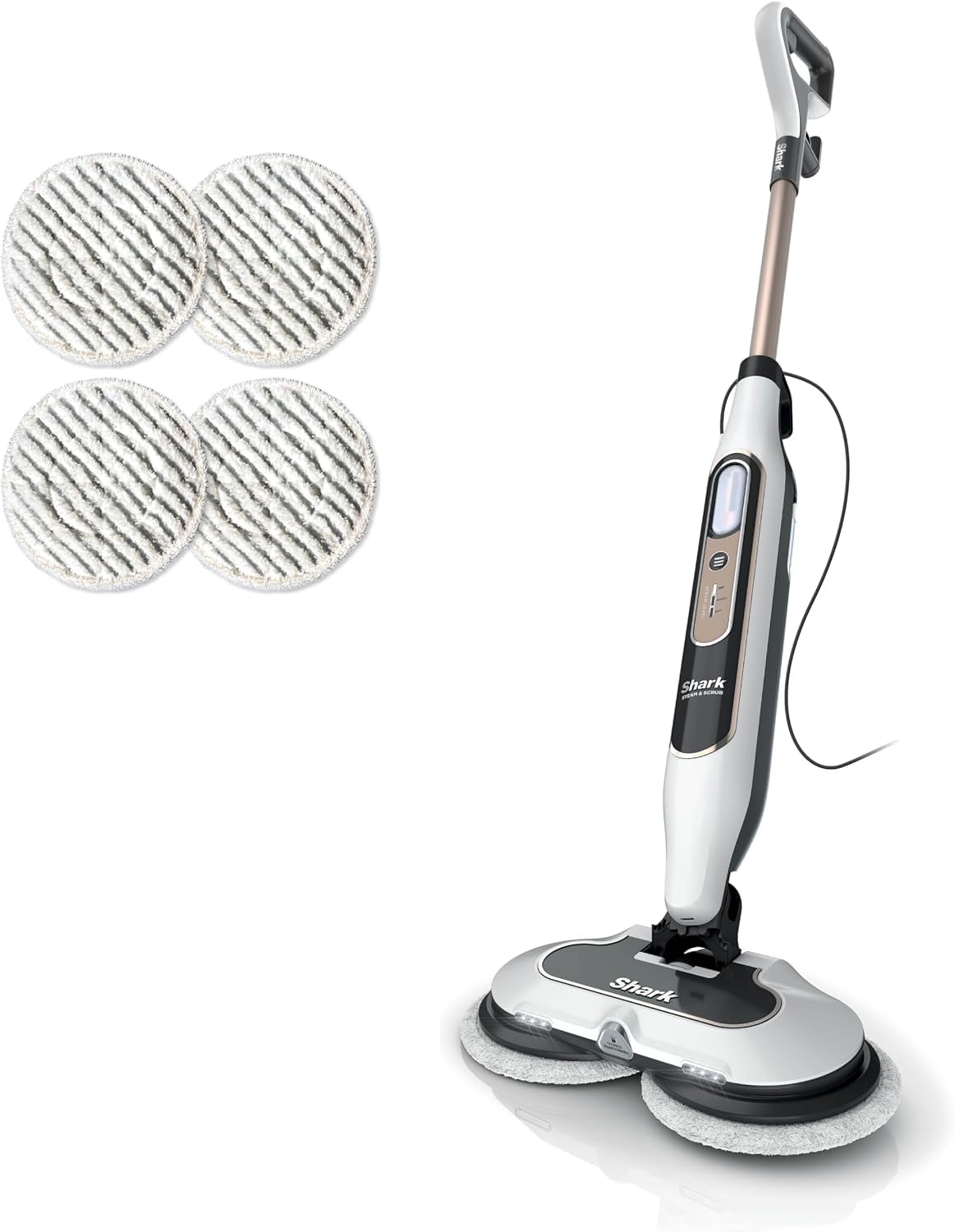
Two rotating pads and steam that lift stuck-on messes from sealed hard floors using just water — with a fingertip steam blaster on the White model.
$42.90
In the box
- Scrubbing steam mop
- Removable 11.8 fl oz water tank
- Machine-washable microfiber pads — 4 with White or Grey, 2 with Teal
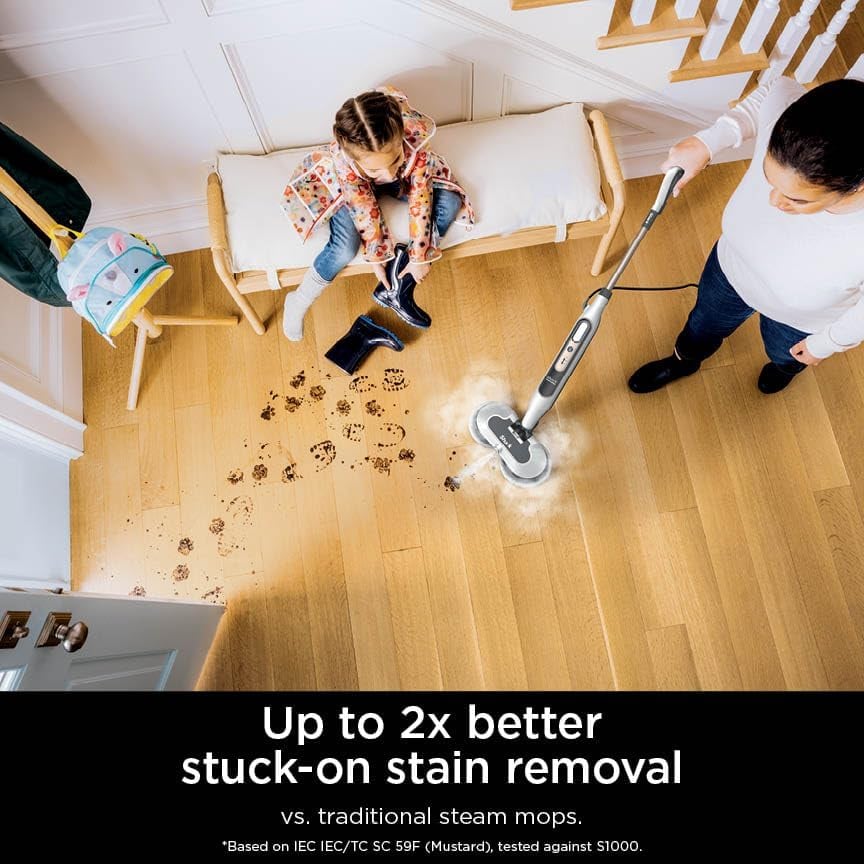
Some messes need more than a wipe. This steam mop pairs hot steam with two automatically rotating pads that scrub more than 150 times a minute, so the pads do the work and you simply guide the head across the floor.
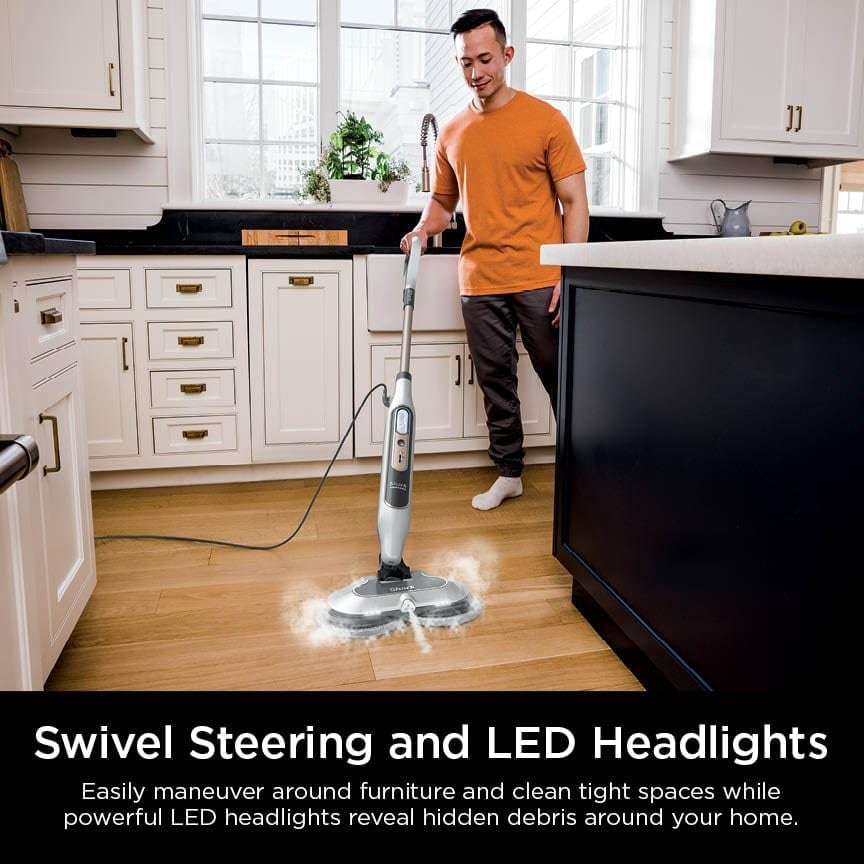
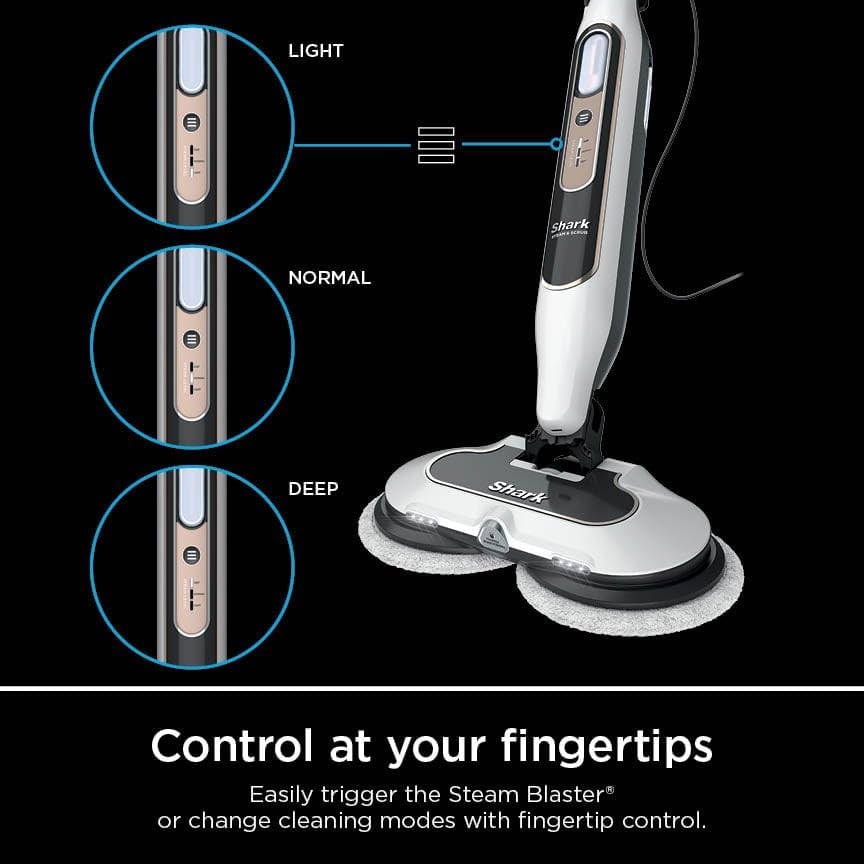
Pick the model that fits the job. White is the full version: a fingertip steam blaster sends a concentrated burst onto dried-on spills, three steam modes run from a Light touch-up to a Deep clean for stuck-on spots, and LED headlights light up the floor ahead. Grey keeps the three steam modes and the headlights without the blaster, and Teal is the simplest, with Light and Normal steam.
Every model has the same removable 11.8 fl oz water tank that lifts off for refilling at the sink, and textured microfiber pads that go straight into the washing machine when you're done — four in the box with White and Grey, two with Teal.
All three are made for every sealed hard floor in the house — hardwood, laminate, vinyl, tile, stone and marble — and clean with plain water, so there's no solution to buy or measure.
Why it cleans faster
The pads do the scrubbing
On every model, two pads rotate on their own at more than 150 scrubs a minute. Instead of pushing and pulling at a mark, you glide the head over it and let the pads and the steam lift it.
Steam right where you need it
The White model puts a steam blaster under your fingertip. Press it over a dried-on spill and a focused burst of steam hits that one spot, while the rest of the floor gets the steady setting you picked.
See what you're cleaning
On White and Grey, LED headlights on the front of the head light up the floor ahead, so crumbs in corners and dust under the couch show up before you roll past them.
- Two rotating pads scrub more than 150 times a minute, so you just guide the head
- Removable 11.8 fl oz water tank for easy refills at the sink
Specifications
The numbers, as the maker lists them.
- Cleaning action
- Two rotating pads, 150+ scrubs per minute
- Steam modes
- Light, Normal, Deep (White, Grey) · Light, Normal (Teal)
- Steam blaster
- White only
- LED headlights
- White and Grey
- Water tank
- 11.8 fl oz, removable
- Power
- 1,120 watts
- Voltage
- 120V
- Weight
- 8.9 lb (White) · 6.9 lb (Grey, Teal)
- Pads included
- 4 (White, Grey) · 2 (Teal)
- Floors
What owners say
4.5
★★★★★
from 78 reviews
- 5★50%
- 4★25%
- 3★25%
- 2★0%
- 1★0%
Write a review
Questions
Which floors can I use it on?
Any sealed hard floor — hardwood, laminate, vinyl, tile, stone and marble. It isn't meant for unsealed or waxed wood, or for carpet.
Do I need a cleaning solution?
No. It cleans with plain water only. The steam and the textured microfiber pads do the work, so there's nothing extra to buy or measure.
How do I clean the pads?
Peel them off the head and put them in the washing machine. White and Grey come with four pads and Teal with two, so you can keep a fresh set on hand while the others are in the wash.
How much water does the tank hold?
The removable tank holds 11.8 fl oz. It lifts off the mop, so you can refill it at the sink without carrying the whole mop over.
Delivery and returns
- OrderedYour confirmation email arrives the moment you pay.
- PackedWe pack it and hand it to the carrier.
- On its wayYour tracking number is emailed as soon as it ships.
- DeliveredEstimated delivery in 5-8 business days.
Changed your mind? Our returns policy sets out how to send it back and how your refund is handled.